
آشنایی با سامانههای برقی پیمایش گرمایشی
سامانه برقی پیمایش گرمایشی روشی برای حفظ یا افزایش دمای لولهها، مخازن، تانکها، ابزارها و سایر تجهیزات با استفاده از کابلها یا المانهای گرمایش برقی نصبشده روی سطح خارجی آنها است.
سامانه برقی پیمایش گرمایشی چیست؟
سامانه برقی پیمایش گرمایشی که با عناوینی مانند پیمایش برقی گرمایی، گرمایش برقی، گرمایش سطحی یا نوار گرمایی نیز شناخته میشود، روشی برای حفظ یا افزایش دمای لولهها، مخازن، تانکها، ابزارها و سایر تجهیزات با اعمال گرما از طریق کابلها یا المانهای گرمایش برقی مخصوص متصل به سطوح خارجی آنها است.
کابلهای گرمایشی در تماس فیزیکی در طول لوله یا سطح قرار میگیرند. سپس عایق گرمایی و معمولاً یک روکش بیرونی محافظ روی تجهیز و کابل اعمال میشود. این عایق، گرما را حفظ میکند و انرژی کابل، گرمای از دسترفته به محیط اطراف را جبران میکند.
در نتیجه، سیالات در جریان میمانند، از یخزدگی جلوگیری میشود و دمای فرایند در سطح موردنظر حفظ میشود.
انواع اصلی کابلهای گرمایشی
انتخاب نوع کابل به دمای فرایند، طول خط، شرایط محیطی و نحوه کنترل وابسته است.
خودتنظیم
هسته پلیمری رسانا بین دو سیم باس قرار دارد. با افزایش دما، مقاومت افزایش یافته و خروجی گرما کاهش مییابد. این کابلها معمولاً در محل قابل برش هستند و در برابر گرمای بیش از حد ایمنترند.
وات ثابت / موازی
در مناطق مختلف امتداد کابل، توان خروجی ثابتی را در واحد طول ارائه میدهد.
مقاومت سری
از یک سیم پیوسته با مقاومت بالا استفاده میکند و توان آن به طول و ولتاژ کلی مدار وابسته است. اغلب برای خطوط لوله طولانی استفاده میشود.
عایق معدنی (MI)
کابل مقاوم با غلاف فلزی، مناسب دماهای بسیار بالا یا محیطهای خشن صنعتی.
اثر پوستی
راهکاری تخصصی که برای خطوط لوله بسیار طولانی مورد استفاده قرار میگیرد.
اجزای معمول
- کابل گرمایشی
- کیتهای اتصال برق و انتهایی
- نوار اتصال یا بست
- عایق گرمایی و مانع بخار یا روکش
- حسگرهای دما و ترموستات
- تابلوهای کنترل
- سامانههای نظارتی در صورت نیاز
کاربردهای رایج
- محافظت در برابر یخزدگی خطوط آب و خطوط آتشنشانی
- حفظ دمای خطوط ابزار دقیق و خطوط پالس
- جلوگیری از جامدشدن، افزایش ویسکوزیته یا کریستالیشدن مواد
- حفظ دمای آب گرم بدون حلقههای گردش مجدد
- یخزدایی سقف و ناودان و ذوب برف رمپ و پله
- گرمایش مخازن و تانکها
- نفت و گاز، پتروشیمی، نیروگاه، صنایع غذایی، دارویی و ساختمانهای تجاری
چه زمانی پیمایش گرمایشی برقی انتخاب مناسبی است؟
این سامانه اغلب برای دماهای فرایندی پایینتر، تقریباً زیر ۱۵۰ درجه سانتیگراد، زمانی که کنترل بهتر دما، بهرهوری انرژی و نصب سادهتر مدنظر باشد و بخار در دسترس یا مطلوب نباشد، نسبت به استیم تریسینگ ترجیح داده میشود. طراحی و نصب صحیح زیر عایق و انتخاب کنترل مناسب برای ایمنی و قابلیت اطمینان ضروری است.
محافظت در برابر یخزدگی لوله آب در فضای باز
نمونهای ساده برای یک کارخانه صنعتی کوچک یا یک مرکز تجاری در آبوهوای سرد.
شرایط مسئله
یک لوله آبرسانی از جنس فولاد کربنی به طول ۵۰ متر و قطر حدود ۵۰ میلیمتر یا ۲ اینچ، از مخزن ذخیرهسازی تا ساختمان فرایند در فضای باز امتداد دارد.
در زمستان دمای محیط میتواند تا ۲۰- درجه سانتیگراد کاهش یابد. زمانی که آب جریان ندارد، برای مثال شبها یا آخر هفته، خطر یخزدگی، ترکیدن لوله و توقف کارخانه وجود دارد.
کابل گرمایشی
یک کابل خودتنظیم، برای مثال با توان حدود ۱۰ تا ۲۰ وات بر متر در دمای ۱۰ درجه سانتیگراد، مستقیماً در امتداد کف لوله نصب میشود.
عایق
لوله و کابل با حدود ۴۰ تا ۵۰ میلیمتر پشم معدنی یا فوم عایق و سپس با روکش آلومینیومی یا PVC محافظت میشوند.
برق و کنترل
کابل از تابلو ۲۳۰ یا ۱۲۰ ولت تغذیه میشود. ترموستات محیطی یا حسگر لوله در دمای پایین کابل را فعال کرده و RCD / GFCI حفاظت ایمنی را فراهم میکند.
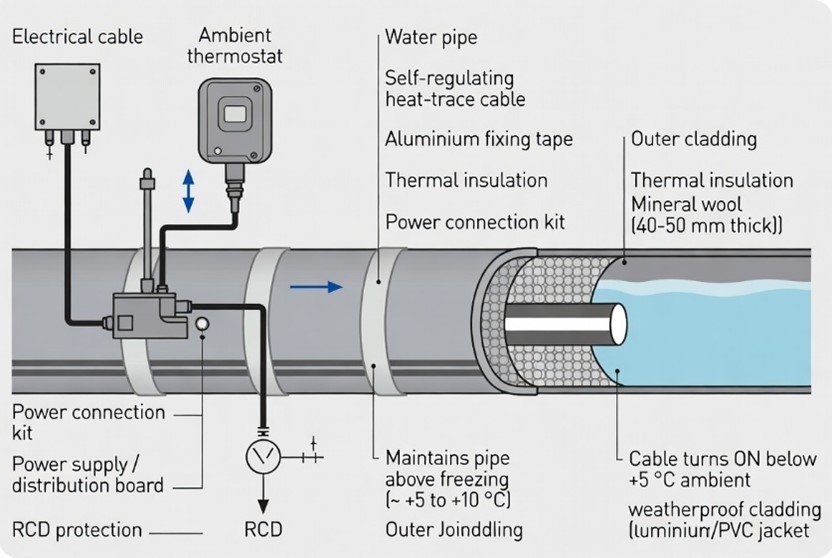
در هوای معتدل ترموستات برق را قطع میکند. با افت دما، کابل روشن شده و آب داخل لوله را بالاتر از نقطه انجماد، معمولاً حدود ۵ تا ۱۰ درجه سانتیگراد، نگه میدارد.
آب یخ نمیزند، لوله سالم میماند و کارخانه بدون هزینه و پیچیدگی سامانه ردیابی بخار یا گردش مجدد مداوم آب به کار ادامه میدهد.
نگهداری گوگرد مذاب در یک خط انتقال کوتاه
نمونهای کاربردی در واحد بازیابی گوگرد (SRU) در کارخانه پتروشیمی یا فرآوری گاز.
شرایط فرایندی
در یک واحد بازیابی گوگرد، گوگرد عنصری به صورت مایع تولید میشود. یک خط انتقال کوتاه در فضای باز یا نیمهباز، برای مثال با طول ۳۰ تا ۸۰ متر و قطر ۸۰ تا ۱۵۰ میلیمتر، گوگرد مذاب را از مخزن یا گودال ذخیرهسازی به ایستگاه بارگیری، گندلهساز یا یک مخزن فرایندی دیگر منتقل میکند.
گوگرد در دمای تقریبی ۱۱۵ تا ۱۱۹ درجه سانتیگراد ذوب میشود. برای سیال و قابل پمپاژ باقیماندن، معمولاً در محدوده ۱۲۵ تا ۱۴۵ درجه سانتیگراد نگهداری میشود. در دمای پایینتر خطر جامدشدن و انسداد خط افزایش مییابد و در دمای بالاتر از حدود ۱۵۵ تا ۱۶۰ درجه سانتیگراد، ویسکوزیته آن به شدت افزایش مییابد.
کابل گرمایش
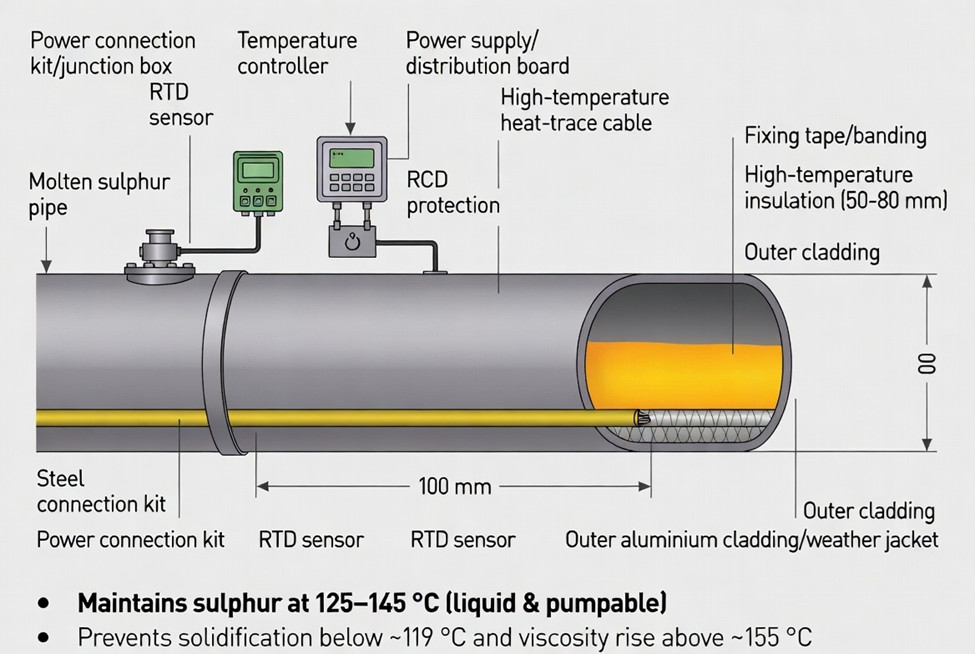
کابل عایق معدنی (MI) با وات ثابت دمای بالا یا کابل خودتنظیم مناسب دمای بالا در امتداد پایین لوله یا به صورت مارپیچ نصب میشود. در فلنجها، شیرها و تکیهگاهها کابل بیشتری در نظر گرفته میشود.
عایق و روکش
خط با حدود ۵۰ تا ۸۰ میلیمتر پشم معدنی دمای بالا یا عایق سیلیکات کلسیم پوشانده شده و سپس با روکش آلومینیومی و آببندی مناسب در برابر شرایط جوی محافظت میشود.
برق و کنترل
کابل از پنل توزیع محلی، اغلب ۲۳۰ یا ۴۰۰ ولت، تغذیه میشود. حسگرهای RTD روی دیواره لوله نصب شده و کنترلر دما را در محدوده حدود ۱۳۰ تا ۱۴۰ درجه سانتیگراد حفظ میکند.
جلوگیری از انسداد پرهزینه خط انتقال
در زمان جریان، سامانه اتلاف حرارتی از طریق عایق را جبران کرده و گوگرد را مایع نگه میدارد. در دورههای جریان کم یا توقف نیز دما حفظ میشود. اگر بخشی از خط سرد شود، کنترلر میتواند توان را برای گرمکردن مجدد کنترلشده افزایش دهد.
مهندسی، تأمین و اجرای سیستمهای هیت تریسینگ الکتریکی (EHT)
شرکت دانشگستر بامداد (DGB) از پیشگامان ارائه راهکارهای هیت تریسینگ الکتریکی در صنایع نفت، گاز، پتروشیمی و نیروگاهی است. با پروژههای اجرایی و تجربیات اثباتشده ما در پروژههای EPC بیشتر آشنا شوید.

